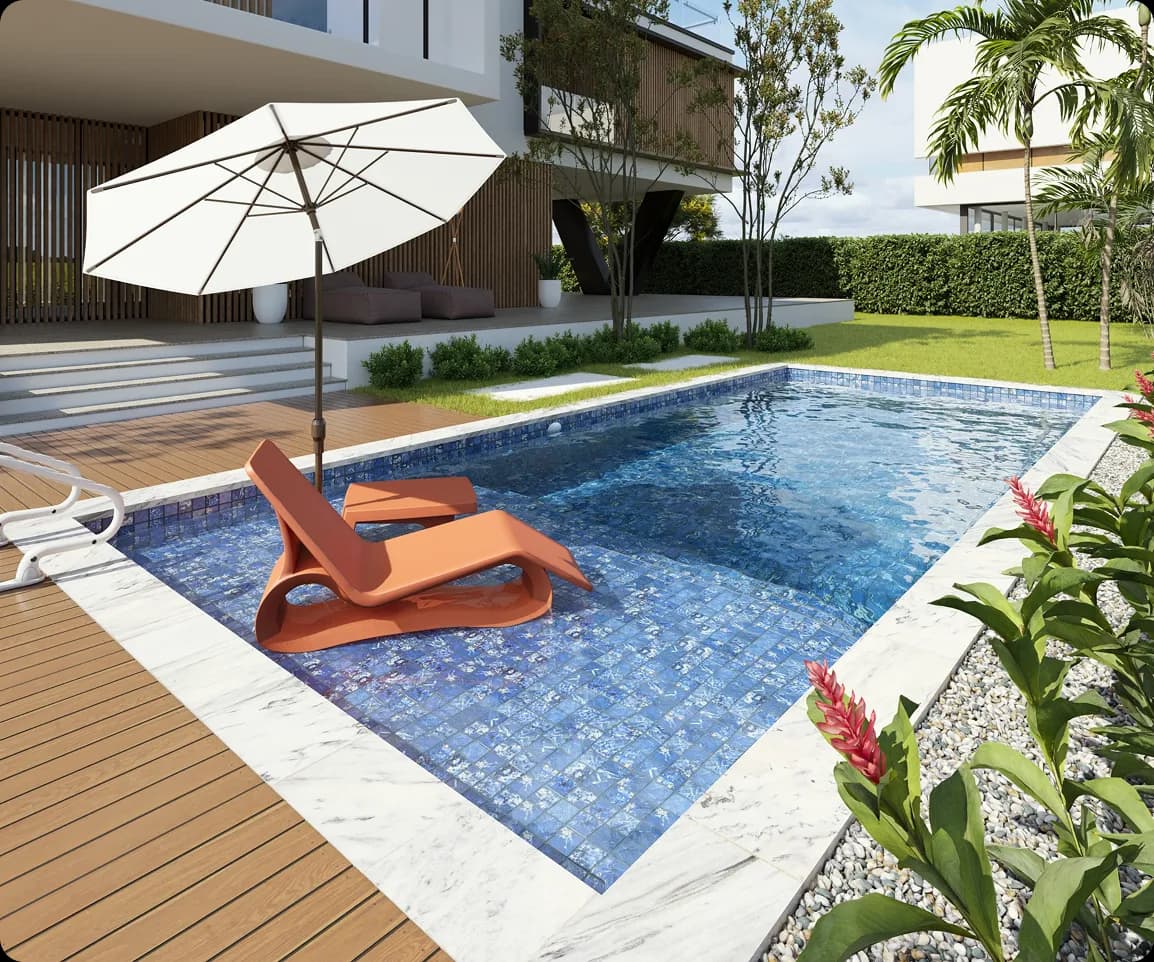
Pentarm Pools
Improving loading speed, UI/UX, SEO & GEO
Pentarm Pools is an established WordPress website for a luxury swimming pool company. I joined the project to improve the website’s performance, technical SEO, accessibility, user experience, and search visibility, while working within the existing WordPress theme and infrastructure rather than rebuilding the site from scratch.
The engagement combines ongoing WordPress development with performance engineering, technical SEO, structured data, accessibility improvements, and preparation for newer AI-driven and agent-based search experiences.
The website had accumulated a number of technical and performance issues over time.
The existing implementation was loading multiple CSS and JavaScript files, serving oversized images, loading unnecessary JavaScript dependencies, and containing several areas of outdated or inefficient code.
There were also opportunities to improve:
- Technical SEO and structured data
- Accessibility
- Responsive image delivery
- Frontend performance
- Asset loading
- User interface consistency
- WordPress code maintainability
- Search-engine and AI/agent understanding of the site’s content
The goal was to improve the existing website without undertaking a complete redesign or rebuild.
I took a systematic approach, beginning with performance and technical audits and then addressing the largest issues across the site’s frontend, WordPress theme, assets, and structured data.
1. Performance Engineering
I optimized the way the website loads and processes its assets.
Key improvements included:
- Combined and minified approximately 15 separate JavaScript modules on the homepage into a compressed JavaScript file.
- Combined approximately 4–6 separate CSS files into a single compressed/minified stylesheet.
- Removed unnecessary jQuery loading from pages that did not require it.
- Optimized third-party Google Analytics and Google Ads script loading.
- Prevented unnecessary video data from being preloaded.
- Corrected stylesheet versioning to improve cache invalidation.
- Investigated and corrected server-side image-generation issues.
- Diagnosed layout problems caused by the interaction between lazy loading and CSS.
These changes reduced unnecessary browser requests and improved the efficiency of the site’s asset-loading process.
2. Responsive Image Optimization
One of the major performance issues was the amount of image data being downloaded by visitors.
I developed reusable WordPress helper functions to standardize responsive image output and introduced support for:
- Appropriate image sizes
- Responsive
srcsetsources - Lazy loading where appropriate
- Optimized image output
- Separate desktop and mobile image versions
- A new 1920px desktop-xl image size
I also replaced oversized CSS background images in key areas with responsive <picture> implementations, including the homepage hero and video poster image.
Navigation Image Optimization
A later PageSpeed investigation identified oversized images being loaded inside the site’s navigation dropdowns.
Some of these images were more than 2,500px wide, despite being displayed at much smaller dimensions.
I changed the navigation image system to serve appropriately sized versions.
Result: approximately 640 KB of unnecessary image data removed from each page load.
Because the navigation is used throughout the website, this improvement provides a site-wide performance benefit rather than improving only one page.
3. Technical SEO & Structured Data
I implemented and improved structured data throughout the website to make the site’s content easier for search engines and other automated systems to understand.
Work included:
- Breadcrumb Schema
- Business Schema
- FAQ Schema
- Location-page FAQ Schema
- Dynamic FAQ structured data
- ACF-powered Business Information fields
- Improved control over internal resource content
- SEO-oriented management of custom post types and taxonomies
The FAQ system was also rebuilt around a reusable helper function so that the visible FAQ content and structured data are generated from the same source.
This reduces duplication, improves maintainability, and creates a more scalable foundation for future content.
4. SEO, GEO & AI-Ready Content Architecture
The project also extends beyond traditional search-engine optimization.
The technical work is being structured to improve how Pentarm Pools’ content can be understood by:
- Traditional search engines
- Search crawlers
- Structured-data systems
- AI-powered search experiences
- Agentic browsing systems
Rather than treating GEO as a separate layer of marketing copy, the focus is on strengthening the underlying technical signals: structured content, schema, accessible markup, clear information architecture, crawlability, and well-structured page content.
This creates a stronger technical foundation for emerging AI-driven discovery and search experiences.
5. Accessibility & User Experience
Performance improvements were combined with accessibility and UI improvements.
Using Lighthouse accessibility testing, I identified interface elements that were difficult for screen-reader users to understand.
Improvements included:
- Added descriptive labels to 11 icon-only buttons
- Improved accessibility of carousel controls
- Improved video controls
- Improved image zoom controls
- Fixed missing accessible names on footer social links
- Improved form-field presentation
- Made form dropdown rows fully clickable
- Improved accordion layouts
- Corrected navigation and link issues
- Improved typography and content presentation across single-post pages
The objective was not only to make the website faster, but also easier to use and more accessible.
6. WordPress Development & Code Improvements
The performance work also uncovered several existing code and functionality issues.
I corrected issues including:
- Damaged CSS class names
- Incorrectly closed links in the mobile mega-menu
- A non-functional footer logo link
- Layout problems related to lazy loading
- Server-side image-size generation problems
- Unnecessary jQuery dependencies
- Inconsistent stylesheet versioning
I also created reusable WordPress helper functions for image rendering and FAQ data retrieval, improving the maintainability of the existing theme.
The improvements produced significant gains in the latest PageSpeed assessment.
| Audit Results | Before | After |
|---|---|---|
| Metric Before After Mobile Performance | 60% | 95% |
| Desktop Performance | 60% | 95% |
| Mobile Accessibility | 75% | 96% |
| Desktop Accessibility | 80% | 96% |
| SEO | 92% | 100% |
| Best Practices | 92% | 92% |
| Agentic Browser | 2/3 | 3/3 |


The technical improvements have also translated into a positive business impact for Pentarm Pools. Since the optimization work began, the website has experienced a significant increase in visitor traffic, reflecting stronger overall visibility and engagement.
The client has been very satisfied with the progress and the improvements made to the website. The project continues as an ongoing engagement, with further work focused on improving performance, technical SEO, GEO, user experience, and organic visibility.
From improving the technical foundation to increasing visibility, the goal is not simply to make the website faster — but to help Pentarm Pools attract and serve more potential customers.